Models
Brands
Body Types
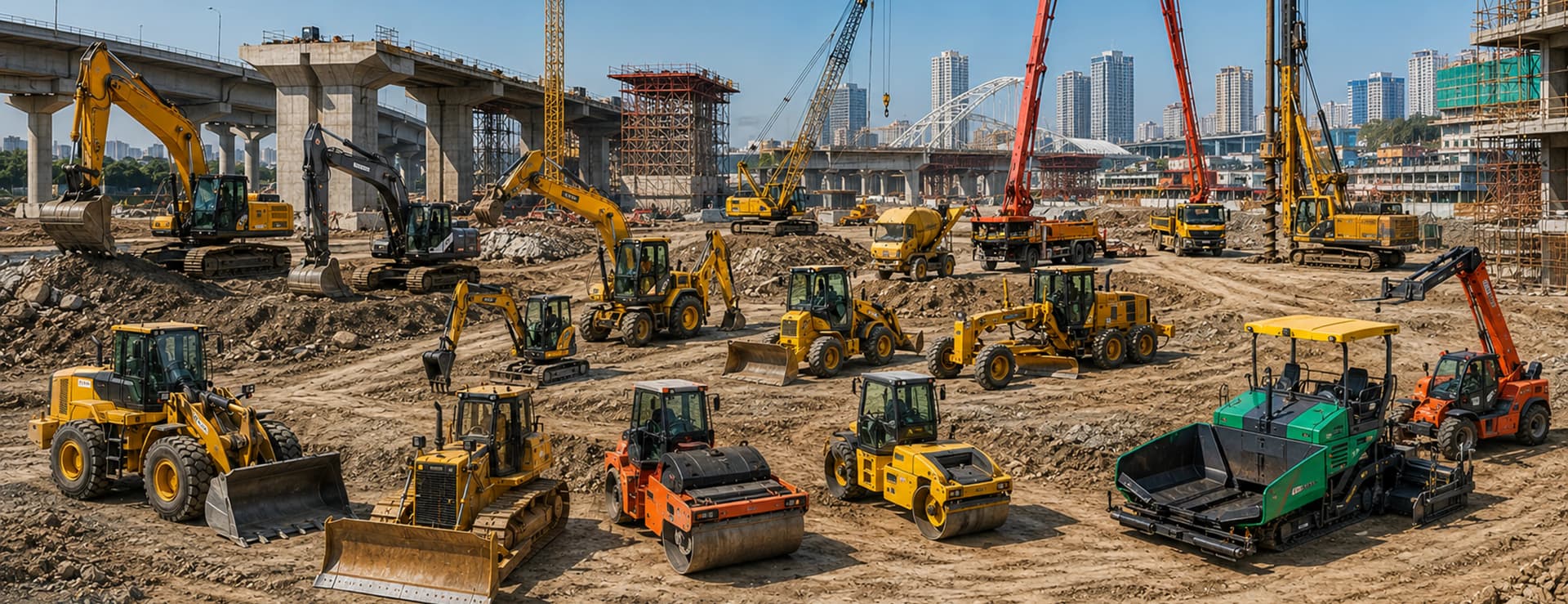
Construction equipment is essential for building roads, housing, bridges, and commercial infrastructure. Specialized heavy machines handle earthmoving, digging, material lifting, land grading, and soil compaction, helping contractors complete projects faster while cutting manual labor costs.
The development of modern construction machinery can be traced to 1835, when William Smith Otis developed a steam-powered excavator in the United States. In India, domestic manufacturing started in 1961 with Tata Motors producing hydraulic excavators, followed by BEML in 1964. A breakthrough came in 1981 with the local rollout of the iconic JCB backhoe loader.
Selecting the right construction equipment in India depends on project scale, site conditions, machine capacity, and budget. On GadiyaHub, contractors can explore 9+ body types, 7+ established brands, and 124+ construction equipment models to find the ideal machine for their work.
Selecting the right machine body type depends on your specific project needs, whether it involves heavy digging, road levelling, or material handling:
Backhoe Loaders: Versatile multi-purpose machines featuring a front loader bucket and a rear backhoe digger. Ideal for utility contractors handling trenching, site clearance, and material loading on urban or mid-sized construction sites.
Excavators (Hydraulic Excavators): Heavy-duty earthmoving equipment engineered specifically for deep foundation digging, heavy trenching, demolition, drainage projects, and large-scale site preparation.
Road Rollers: Specialized compaction equipment designed to compress asphalt and sub-base layers, ensuring smooth, durable, and even surface finishes in road building and driveway construction.
Soil Compactors: Engineered to compress loose soil, sand, and gravel to create high-density, stable ground foundations for roadbeds, building bases, and civil engineering infrastructure.
Wheeled Loaders: Heavy-capacity loading equipment designed for fast scooping, lifting, and stockpiling bulk materials like sand, gravel, stone aggregates, and construction waste across quarries and large job sites.
Skid Steer Loaders: Their compact size makes them useful on sites where a full-size loader cannot move comfortably. Contractors often use them for landscaping, demolition, debris handling, and other jobs requiring frequent movement in confined spaces.
Motor Graders: Precision land-leveling machinery equipped with a long adjustable blade. Used extensively in road construction to create flat, properly sloped sub-grade surfaces before paving.
Telescopic Handlers (Telehandlers): Heavy lifting machines with extendable booms, designed to lift and place heavy construction materials such as bricks, concrete blocks, and beams at high elevations.
Articulated Haulers: Heavy-duty off-road dump trucks built to transport massive loads of dirt, rock, and aggregates across rough terrain, quarry routes, and large-scale mining operations.
Construction equipment price in India varies based on machine type, operating weight, engine power, hydraulic attachments, brand, and overall tech features. Heavy machinery ranges from compact budget-friendly units for local site work to high-capacity equipment engineered for massive infrastructure projects:
Construction Equipment Under Rs. 40 Lakh: Best for small contractors, civil utility work, and general site development. These entry-level machines offer reliable performance for basic digging, loading, and road maintenance. Popular models include Under Rs. 40 Lakh JCB 3DX, JCB VM 117, ACE AX 130, and Mahindra EarthMaster SXL.
Construction Equipment Between Rs. 40-70 Lakh: Features mid-to-large capacity machinery designed for demanding commercial construction and continuous site operations. Popular models include the JCB NXT 150, JCB 130, Mahindra RoadMaster G90, and JCB NXT 225 LCM.
Construction Equipment Between Rs. 70 Lakh-1 Crore: Includes heavy-duty machinery built for large-scale infrastructure, deep excavation, and mining applications. Popular choices include Between Rs. 70 Lakh-1 Crore JCB NXT 245HDLR and ACE AG176.
Note: Construction Equipment On-road prices fluctuate based on state taxes, insurance costs, specialized hydraulic attachments, and transportation fees. Buyers should verify current ex-showroom and final quote details before purchasing.
Diesel Construction Equipment: It is the primary fuel option for most construction machinery because heavy equipment requires continuous power and high torque for demanding tasks. Diesel machines are best suited for daily earthmoving, road construction, and large-scale infrastructure projects where long operating hours and heavy-duty performance are required.
Leading heavy machinery manufacturers available on GadiyaHub include popular brands such as ACE, Hyundai, JCB, Mahindra, Preet, Tata Hitachi, and Volvo. Top-performing models on the platform feature popular models choices like the JCB 3DX, JCB 3DX Xtra, Tata Hitachi EX 210 Infra Super Plus, Volvo EC 220, ACE AX 124, Tata Hitachi NX 50, and Hyundai R 220 L Smart Plus.
However, choosing a machine based on brand name or popularity alone isn't enough. Different variants within the same model lineup come with distinct engine outputs, operating weights, hydraulic attachments, and price tags. Before shortlisting, contractors should review specific variant specifications on GadiyaHub to ensure the equipment aligns with their daily job site demands.
Selecting the right heavy equipment requires matching machine specifications to your specific job site requirements, whether it involves road construction, continuous earthmoving, or material handling.
Engine Power & Operating Weight: Match engine output and operating weight with the workload. Engine power supports overall machine performance, while hydraulic system capacity and machine weight have a major role in digging and breakout performance.
Capacity & Working Dimensions (Bucket, Depth, Payload): Check bucket capacity, maximum digging depth, lifting capacity, and overall machine dimensions to verify the equipment can handle your daily load cycles, trenching limits, and work within site clearance constraints.
Attachment Compatibility & Versatility: Verify if the machine supports specialized hydraulic attachments such as rock breakers, augers, or specialized buckets needed for your specific contract operations.
Fuel Consumption & Daily Operating Cost: Evaluate real-world hourly fuel consumption figures, as running costs form a major part of continuous long-hour site expenses.
Maintenance & Spare Parts: Look into routine service intervals, spare parts pricing, and local parts availability. Easy access to genuine spares prevents costly machine downtime during critical project deadlines.
Dealer Network: A widespread dealer network ensures quick technician response times, emergency field support, and hassle-free warranty claims. Buyers can check GadiyaHub's dealer directory to locate authorized equipment showrooms and service centers nearby.
Resale Value: Heavy equipment resale demand depends on total engine operating hours, overall mechanical condition, brand reputation, and complete maintenance history. Choosing a well-supported model ensures strong residual value when upgrading your fleet.
Finding the right construction machinery is much easier when you can compare options side-by-side based on job application, technical specifications, and budget. On GadiyaHub, contractors and fleet owners can explore 124+ heavy machinery models from 7+ trusted brands across 9+ body types.
You can easily compare ex-showroom prices, engine specifications, operating weight, hydraulic attachments, and available variants to shortlist the ideal equipment for your site requirements. Whether you need a backhoe loader for utility site work, a hydraulic excavator for earthmoving, a road roller for surface compaction, or a wheeled loader for material handling, evaluating suitable choices first ensures you invest in a machine that fits your project demands and budget.
For contractors searching for the best construction equipment in India, comparing machine specifications, prices, body types, brands, and intended applications before making a purchase can help narrow down the right options.
Ex-Showroom
Ex-Showroom
Ex-Showroom
Ex-Showroom
Ex-Showroom
Ex-Showroom
Ex-Showroom
Ex-Showroom
Ex-Showroom
Ex-Showroom
Ex-Showroom
Ex-Showroom
Ex-Showroom
Ex-Showroom
Ex-Showroom
Ex-Showroom
Ex-Showroom
Ex-Showroom
Ex-Showroom
Ex-Showroom
