Models
Brands
Body Types
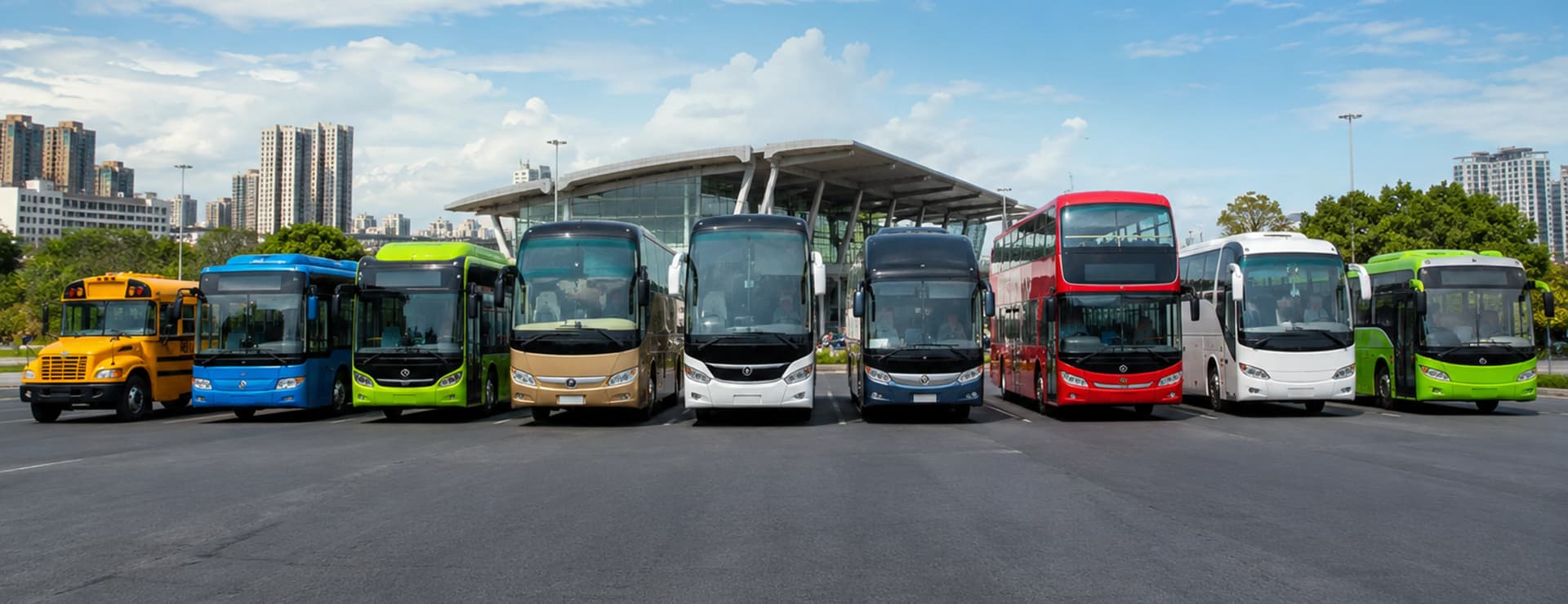
Buses form the backbone of India's passenger transport network, connecting daily commuters, students, office employees, and long-distance travelers across cities and rural routes. Depending on operational needs, buyers can select specialized configurations including school buses, staff transport, luxury tourist buses, and intercity route coaches.
The history of bus transit started in 1895 when Karl Benz built the world's first petrol-powered bus in Germany. Public bus transport debuted in India in 1926 with Mumbai's BEST launching its first service. Following independence, domestic manufacturing took off as Tata Motors and Ashok Leyland pioneered local production, transforming Indian public transit from classic double-deckers into today's eco-friendly electric buses.
Choosing the best passenger bus depends on seating capacity, route length, passenger comfort features, and daily running costs. On GadiyaHub, fleet operators and transport owners can explore buses across 6+ body types, 6+ leading brands, and 119+ bus models to compare buses that best match their route demands and budget.
Selecting the right bus body type depends on the passenger service, route, seating requirement, and daily operating needs. Whether you need a bus for school transportation, employee travel, tourism, or long-distance routes, different bus body types are available for specific commercial and passenger transport requirements.
School Bus: Built with a strong focus on student safety and easy boarding, a school bus for daily student transportation features high-visibility yellow exteriors, low step-in heights, durable seating, and built-in speed governors. For educational institutions that need a dependable student transport vehicle to handle regular pickup and drop routes, this is the industry standard.
Staff Bus: Corporate offices, industrial hubs, and manufacturing units rely heavily on a staff bus for employee transportation to manage daily commutes. Designed around structural durability, high seating capacity, and manageable maintenance costs, it serves as a highly practical employee transport bus for fixed routes and routine commercial operations.
Tourist Bus: When the goal is keeping group travelers comfortable during sightseeing trips, multi-day tours, or regional journeys, a tourist bus for group travel is the go-to option. Travel agencies and tour companies prefer these vehicles because they can be customized with reclining seats, powerful air conditioning, entertainment setups, and spacious luggage bays.
Intercity Bus: Engineered specifically for long highway stretches between major towns and cities, an intercity bus for long-distance travel offers the endurance required for heavy commercial runs. Fleet operators running fixed schedules rely on these long-distance passenger buses for their large fuel tanks, ample luggage capacity, and comfortable seating or sleeper berths.
Bus Chassis: Delivered purely as a structural frame without a cabin or internal layout, a bus chassis for custom body construction serves as a versatile baseline. It grants bodybuilders and fleet managers total freedom to engineer a vehicle tailored to exact seating arrangements, luxury features, or unique commercial requirements.
Ambulance bus: Prepared to transport critical care patients securely alongside onboard medical machinery, an ambulance bus for emergency patient transportation meets high-priority clinical needs. Hospitals and emergency response providers equip these vehicles with stretcher platforms, oxygen cylinder mounts, specialized cabinetry, and siren systems to ensure swift medical transit.
Choosing the right bus fuel type directly impacts your daily running costs, fuel efficiency, route performance, and long-term operating expenses. Commercial buyers can easily compare diesel, CNG, and petrol options based on passenger load, route distance, local refueling infrastructure, and overall transit needs.
Diesel Bus: Highway transport and heavy commercial fleets depend heavily on a diesel bus for long-distance travel because of its high torque output and pull-power. These engines handle fully loaded long-haul trips without breaking a sweat, making them the most practical pick for intercity operators covering heavy daily mileage.
CNG Bus: Running daily urban commutes, school routes, or corporate shuttles becomes significantly cheaper with a CNG bus for city transport, provided local filling stations are readily accessible. City fleet owners prefer these models to cut down on daily operational expenses while simultaneously lowering vehicle exhaust emissions during constant stop-and-go driving.
Petrol Bus: If your route involves smaller passenger numbers and quick neighborhood runs, investing in a petrol bus for short-distance routes keeps your initial buying cost low. These compact passenger movers deliver a quiet, smooth ride that works exceptionally well for short feeder services and light commercial transit.
Bus prices in India vary depending on passenger capacity, engine output, chassis type, seating layout, body fabrication, and comfort features. The overall bus cost in India also changes according to the intended application, such as school transport, staff movement, city operations, or long-distance travel. GadiyaHub helps fleet operators and institutional buyers compare bus models according to their budget and operating requirements.
Buses Under Rs. 20 Lakh (Compact & Mini Passenger Buses): Educational institutions, local feeder lines, and small businesses checking the mini bus price under Rs. 20 lakh will find this budget-friendly segment ideal for daily runs. If you are currently evaluating the school bus price in India for basic passenger routes, models like the BharatBenz 1017 School and BharatBenz 917 School offer a solid entry point.
Buses Between Rs. 20-30 Lakh (Mid-Range Staff & School Buses): Investing in mid-sized commercial fleets gets much easier in this category, especially for buyers researching staff bus prices or upgrading medium-capacity institutional vehicles. Options like the BharatBenz 1017 Staff showcase how commercial bus prices in India in this range balance passenger comfort with durable, everyday performance.
Buses Between Rs. 30-50 Lakh (Heavy-Duty Intercity & Commercial Buses): Fleet operators expanding into long-haul tourist routes or high-capacity state transit usually look at the heavy-duty segment. Anyone comparing a heavy-duty bus price or checking an intercity bus price in India for demanding commercial schedules will find robust options here, including the BharatBenz Heavy Duty 1624.
Note: The final on-road bus price can vary because of state taxes, registration charges, insurance, custom HVAC (AC) installation, and body customization. Buyers should check the latest bus price and variant-wise quotation for their location before making a purchase.
Selecting a reliable vehicle for institutional commutes, city routes, or long-distance passenger travel starts with choosing a dependable manufacturer. The Indian commercial vehicle sector is led by prominent bus brands in India, including Ashok Leyland, BharatBenz, Eicher, Mahindra, Tata Motors, and Volvo, each delivering specialized chassis platforms and fully built commercial passenger transport solutions.
Fleet operators and institutional buyers exploring popular bus models in India on GadiyaHub can compare well-known options like the Tata Starbus, Tata Winger Plus, Ashok Leyland Viking, Ashok Leyland Lynx Smart, Eicher Skyline Pro, BharatBenz 1017 Staff, Mahindra Cruzio School, and Volvo 9600. These trusted passenger bus models span a wide range of operational requirements, from everyday school buses and staff shuttles to luxury tourist coaches and long-haul intercity fleet buses.
However, finalizing a commercial bus solely on brand recognition or market popularity isn't always sufficient. A single bus model can have multiple variants featuring distinct seating capacities, engine outputs, chassis dimensions, body configurations, and overall bus prices. To ensure long-term profitability and operational fit, fleet managers should thoroughly compare bus specifications, seating layouts, on-road prices, and variant-wise features on GadiyaHub before making a final purchasing decision.
Selecting the right commercial passenger bus requires matching technical specifications to your specific route demands, whether you manage daily school runs, corporate employee commutes, or long-distance intercity travel:
Seating Capacity & Cabin Layout: Choose a passenger seating capacity that matches your daily route load. Ensure the interior walking space, seat spacing, and door access fit your specific passenger group, such as low steps for school children or reclining seats for long-distance commuters.
Engine Power, Torque & GVW: Verify the engine output, Gross Vehicle Weight (GVW), and hill-climbing torque to ensure the bus can carry full passenger loads effortlessly across city stop-and-go traffic, steep inclines, or highway cruising speeds.
Vehicle Dimensions & Turning Radius: Check total length, width, height, ground clearance, and turning radius. Compact dimensions and a tight turning circle are essential for navigating narrow urban streets, busy school zones, and tight pickup spots smoothly.
Fuel Efficiency & Tank Capacity: Evaluate real-world fuel economy and fuel tank size. A larger fuel tank can reduce the frequency of refuelling stops on long routes, while efficient engines lower daily operating expenses for urban fleet operators.
Luggage Storage & Passenger Comfort: Long-distance tourist and intercity buses need spacious under-floor luggage boots, overhead parcel racks, smooth suspension, and proper ventilation or air conditioning to ensure passenger satisfaction.
Maintenance & Spare Parts: Review scheduled service intervals, local spare parts availability, and routine maintenance costs. Easy access to affordable spares minimizes vehicle downtime and keeps your passenger transport fleet running smoothly without missing daily trips.
Dealer Network: A widespread dealer and service network ensures quick scheduled servicing, fast roadside assistance, and hassle-free warranty support. Transport operators can explore GadiyaHub’s dealer directory to locate authorized bus service centers nearby.
Resale Value: Passenger bus resale value depends on the vehicle's age, overall body condition, engine maintenance history, total kilometers driven, and active market demand. Choosing a well-maintained model from a trusted manufacturer protects your fleet's long-term resale investment when it is time to upgrade.
Finding the right bus for your business is much easier when you can compare options side-by-side based on route requirements, seating capacity, and budget. On GadiyaHub, buyers and transport operators can explore 119+ bus models from 6+ trusted brands across 6+ body types.
You can easily compare ex-showroom prices, engine specs, fuel options, seating layouts, and image galleries to shortlist the best option for your operational needs. Whether you need a safety-focused school bus, a reliable staff transport bus, a luxury tourist coach, or a high-capacity intercity bus, reviewing different models first helps you select a vehicle that fits your passenger load and long-term budget.
Ex-Showroom
Ex-Showroom
Ex-Showroom
Ex-Showroom
Ex-Showroom
Ex-Showroom
Ex-Showroom
Ex-Showroom
Ex-Showroom
Ex-Showroom
Ex-Showroom
Ex-Showroom
Ex-Showroom
Ex-Showroom
Ex-Showroom
Ex-Showroom
Ex-Showroom
Ex-Showroom
Ex-Showroom
Ex-Showroom
